

Capture golden oven and cooling samples
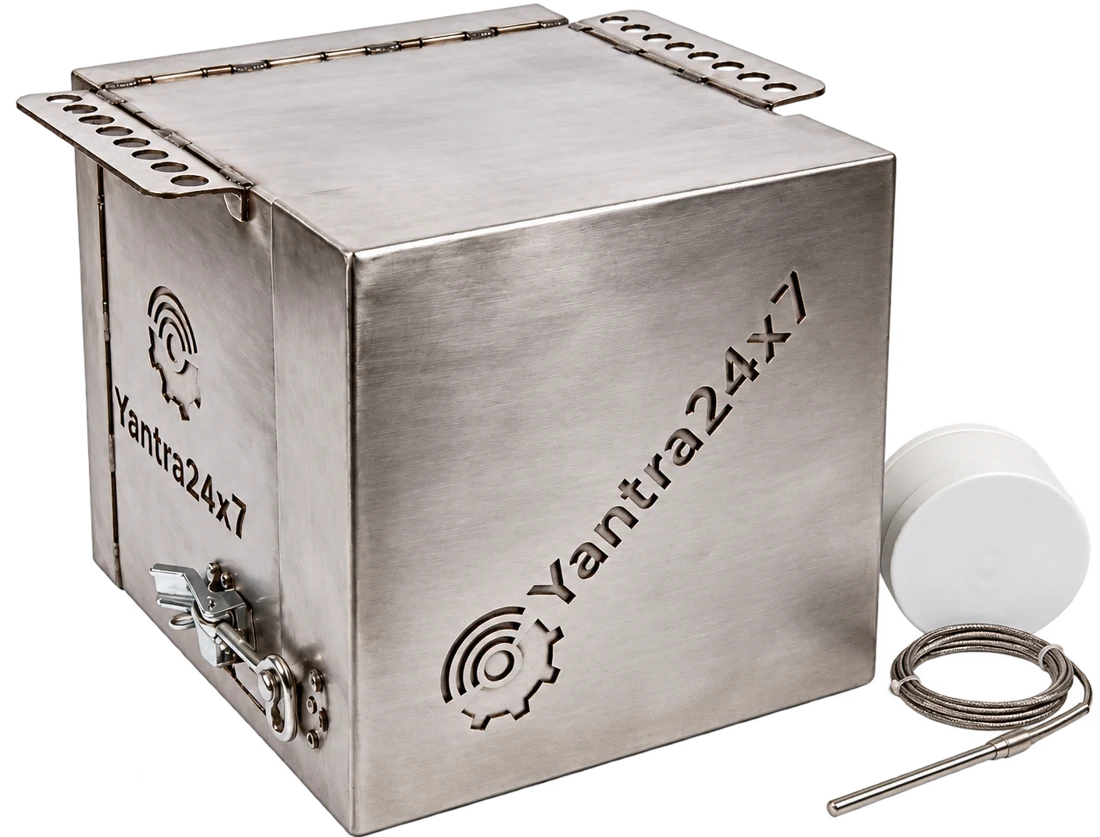
A wireless temperature logger used to record golden reference samples for oven heating, cooling and finished-part quality.
PiatIQ measures the air temperature inside the mould, so you stop heating at exactly the right moment.
Cure is a guess
Oven time is fixed, but the air temperature inside the mould is never measured part by part. PiatIQ gives you the measured reference to work from.
- BeforeFixed oven time. The air inside the mould is never read, so cure is a guess.
- With PiatIQA probe measures the air inside the mould every cycle, part by part.
PiatIQ: capture golden oven and cooling samples
- 01Golden sample captureRecord the reference temperature profile for a quality-approved part.
- 02Oven temperature profileMeasure the heating curve throughout the oven stage.
- 03Cooling temperature profileRecord the cooling curve until the part reaches the required condition.
- 04Quality benchmarkCompare production cycles with the golden sample to identify temperature-related quality variation.
Read the temperature curve. Control the cycle.
PiatIQ captures the real internal-air temperature inside the mould so your team can compare every production cycle against a quality-approved golden sample.
How to read a PiatIQ cycle chart
Use the three stages below to confirm that heating, peak internal air temperature and cooling match the approved process window.
- 01HeatingThe rising curve shows how the air inside the mould responds while it is in the oven. Compare the ramp with the golden sample to spot slow or uneven heating.
- 02PIAT peakThe highest internal-air temperature is the quality reference point. Reaching the approved PIAT confirms the mould has received the required heat.
- 03CoolingFollow the cooling curve until the part reaches the required condition. A repeatable cooling profile protects part quality and cycle time.
Temperature evidence from the mould
Compare these reference traces with production data to identify variation early and maintain a repeatable process.
Use the golden sample as the temperature and quality reference for every arm, mould and cycle.
Every arm
Check each arm against the same golden profile.
Every mould
One measured reference per mould, not an assumption.
Every cycle
Compare each production cycle with the golden sample.
PiatIQ
What is the air inside your mould really doing?
- +91 95009 10403 (India)
- +1 313 486 9697 (US)
- sales@yantra24x7.com